About This Offering

This program is designed to help you move beyond the hype and put AI to work in your own context. We will take a practical, beginner-friendly approach: starting with intuitive foundations and quickly progressing to building real-world applications.

Registration


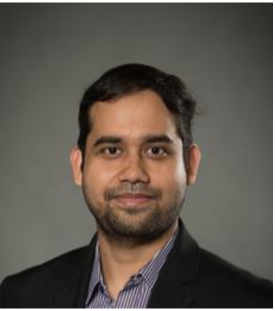
Dr. Suman Maity

Suman Maity is an Assistant Professor in the Department of Computer Science at Missouri S&T. Prior to this role, he was a postdoctoral research associate at the Massachusetts Institute of Technology. Before that, he spent couple of years as a postdoctoral fellow at Center for Science of Science and Innovation (CSSI) and The Northwestern Institute on Complex Systems (NICO), Northwestern University. He received his PhD in Computer Science and Engineering from Indian Institute of Technology Kharagpur. He was also the recipient of IBM PhD Fellowship and Microsoft Research India PhD Fellowship Award.

His research interests lie in the interdisciplinary areas of Social NLP, LLM and Responsible Machine Learning. His research contributions have been featured in top-tier international conferences and journals such as WWW, EMNLP, ACL, ICWSM, CSCW, AAMAS, Physical Review E, Nature Scientific Reports, PNAS Nexus etc. He has also served as Senior PC member/PC member/reviewer for AAAI, WWW, ICWSM, CSCW, CHI, TCSS, KNOSYS, Physica A, Neurocomputing and others.

  • Registration: Open until August 14, 2025
  • Course Dates: August 21 & 22, 2025
  • PDH: 16
  • Price: $1,400
  • Prerequisites:
    • Basic python programming knowledge
    • Familiarity with machine learning concepts
       
  • Location: 2127 Innerbelt Business Center Drive, St. Louis, MO 63114
    • Directions 
    • Also delivered live online via Zoom

This course covers the evolution of language models, transformer-based architectures, and practical applications like prompt engineering and Retrieval-Augmented Generation (RAG). Students will utilize tools such as Hugging Face and LangChain to develop LLM-powered projects, building a comprehensive skill set in modern natural language processing.

  • Introduction to Language Models
    • Evolution of language modeling: N-grams → RNNs → Transformers → LLMs
    • Why LLMs matter: zero-shot, few-shot, and chain-of-thought reasoning
    • Overview of popular models: Open-source (LLaMA, Mistral) vs proprietary (GPT, Claude)
  • Tokens and Embeddings
    • What are tokens? Tokenization strategies: Byte Pair Encoding (BPE), WordPiece, SentencePiece
    • From static to contextual embeddings: Word2Vec → BERT → GPT
    • Hands-on: Visualize tokenization and embedding spaces using dimensionality reduction (e.g., t-SNE or UMAP)
  • Transformer Model
    • Key components: self-attention, multi-head attention, positional encodings
    • Transformer variants: encoder-only (BERT), decoder-only (GPT), encoder-decoder (T5)
    • Anatomy of a layer: attention heads, feedforward layers, residual connections, layer normalization
    • Hands-on: Explore a simplified transformer architecture
  • Prompt Engineering
    • Prompting strategies: zero-shot, few-shot, chain-of-thought, and system-level prompts
    • Instruction tuning vs prompt engineering
    • Hands-on: Design prompt templates for summarization, Q&A, and reasoning
    • Build a prompt-based mini app (e.g., travel planner, story generator) using OpenAI API or open-source LLMs via Hugging Face
  • Retrieval-Augmented Generation (RAG)
    • What is RAG? Concept, motivation, and key applications
    • Core components: document chunking, text embeddings, vector stores, retrievers, re-rankers
    • Popular frameworks: LangChain, LlamaIndex, FAISS, Chroma etc.
    • Hands-on: Build a mini RAG system to answer questions from PDF files or Wikipedia articles
  • Final Project & Wrap-Up